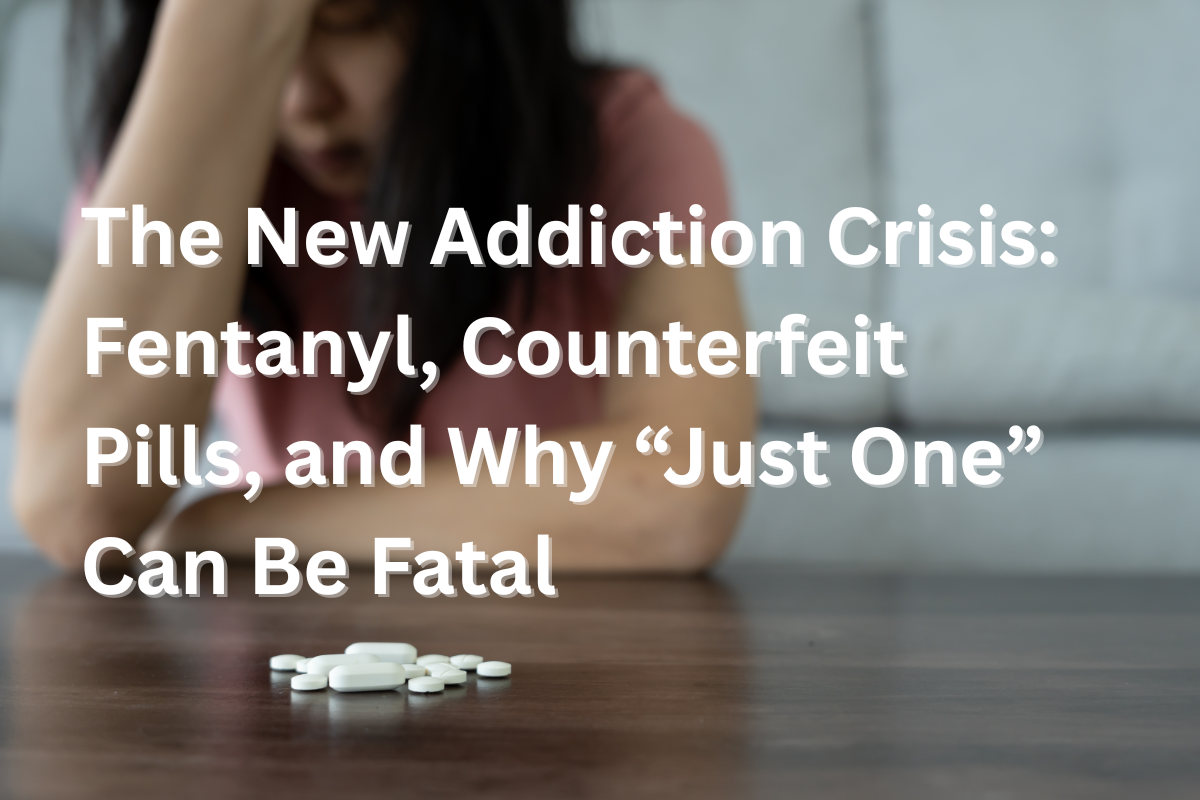
The New Addiction Crisis: Fentanyl, Counterfeit Pills, and Why “Just One” Can Be Fatal
You are here:Addiction and substance misuse have long affected individuals, families, and communities across the country—but the crisis looks very different today than it did even five years ago. While drugs like alcohol, heroin, and methamphetamine continue to impact lives, one substance in particular has transformed the overdose epidemic into something faster, deadlier, and harder to predict: fentanyl.
At Design for Change, we believe that education, compassion, and support are key to preventing overdose deaths and helping individuals and families find a path to recovery. Addiction is not a personal weakness, and substance use is not a “bad choice problem.” It is a complex public health issue shaped by biology, trauma, mental health, stress, and social conditions.
But fentanyl has introduced a new reality: a person doesn’t have to “struggle with addiction” for fentanyl to take their life. Sometimes it only takes one pill, one mistake, or one moment of misinformation.
This post explores a major trending topic in substance abuse today—fentanyl and counterfeit pills—and what every community should understand about prevention, harm reduction, and recovery.
What Is Fentanyl?
Fentanyl is a synthetic opioid that is extremely potent. In medicine, fentanyl can be used legally to treat severe pain, particularly after surgery or for advanced cancer care. The fentanyl driving overdose deaths today, however, is typically illicitly manufactured fentanyl, produced and distributed illegally.
According to the CDC, fentanyl is a key factor behind the dramatic rise in overdose deaths, especially when mixed into other substances without the user’s knowledge.
Learn more here:
https://www.cdc.gov/stopoverdose/fentanyl/index.html
Why fentanyl is so dangerous
Fentanyl is dangerous because:
- it is very strong in tiny amounts
- it can cause respiratory depression (slowed/stopped breathing)
- overdose can happen quickly
- many people don’t know they have taken it
Even small, nearly invisible amounts can be lethal—especially to people with no opioid tolerance.
The Trend Changing Everything: Counterfeit Pills
One of the most alarming and fast-growing trends in the substance abuse crisis is the spread of counterfeit pills—fake medications manufactured to look identical to real prescription drugs.
These counterfeit pills are often sold as:
- Xanax (alprazolam)
- Percocet or Oxycodone
- Adderall
- Vicodin
- other “pharmacy-like” pills
But instead of containing what the label suggests, counterfeit pills may include:
- fentanyl
- fentanyl analogs
- methamphetamine
- unknown chemical mixtures
Why this trend is especially dangerous
Counterfeit pills are dangerous not only because they’re toxic—but because they change who is at risk. Many people who might never consider using heroin or injecting drugs may still take a pill offered by a friend or purchased online.
The DEA has warned publicly that counterfeit pills have become widespread and often contain fentanyl.
DEA warning campaign:
https://www.dea.gov/onepill
The phrase “One Pill Can Kill” isn’t fear-based marketing—it’s the reality of modern drug supply.
Social Media and the New Drug Market
A major reason counterfeit pills have spread so rapidly is that drug distribution has modernized. Increasingly, illicit pills are sold through:
- social media apps
- encrypted messaging platforms
- online “dealer networks”
- person-to-person delivery systems
This creates the false impression that pills are “safe” because they’re:
- packaged neatly
- marketed like real meds
- sold with professional-looking images
- delivered discreetly
But the truth is: you cannot tell if a pill contains fentanyl by looking at it. Even two pills from the same batch may have different amounts, because illegal manufacturing is inconsistent.
Overdose Risk Is No Longer Limited to “Heavy Use”
For many years, overdose was most associated with chronic opioid use, particularly heroin. Today, fentanyl has changed overdose risk patterns dramatically.
Now, overdose can occur in situations like:
- recreational drug use at a party
- experimentation by teens and young adults
- using “Xanax” to relieve anxiety
- taking a pill to stay awake and study
- using cocaine or other stimulants laced with fentanyl
- relapse after a period of sobriety (reduced tolerance)
This is one reason fentanyl is sometimes described as reshaping addiction and overdose into a wider public health emergency, impacting people across age groups and backgrounds.
Addiction Is a Health Condition — Not a Character Flaw
One of the biggest barriers to prevention and treatment is stigma. People struggling with substance use are often judged as irresponsible, weak, or “choosing drugs.”
But addiction is widely recognized as a medical condition, involving changes in brain chemistry and behavior.
The National Institute on Drug Abuse explains addiction as a chronic disorder—not a lack of willpower:
https://nida.nih.gov/publications/drugs-brains-behavior-science-addiction
This doesn’t mean people are helpless. It means recovery requires the same understanding we give other health challenges—support, treatment, community resources, and a long-term approach.
Why People Use: The Link Between Trauma, Stress, and Substance Use
Substance misuse often begins as self-medication. People may use drugs or alcohol to cope with:
- grief
- depression
- anxiety
- PTSD
- childhood trauma
- emotional pain
- chronic stress
- social pressure
- loneliness
Drugs can temporarily reduce pain or increase pleasure—but over time, they can become the brain’s “shortcut” to relief, creating dependence and addiction.
This is why modern treatment increasingly focuses on:
- trauma-informed care
- mental health support
- emotional regulation and coping skills
- community connection
SAMHSA resources for mental health and substance use support:
https://www.samhsa.gov/find-help
Recognizing the Signs of Overdose
Because fentanyl acts quickly, it’s crucial for individuals and families to know overdose warning signs.
Possible signs include:
- very slow or stopped breathing
- pale, cold, clammy skin
- blue or gray lips/fingertips
- choking or gurgling sounds
- inability to wake up
- unconsciousness
If overdose is suspected, call emergency services immediately.
CDC guidance on recognizing/responding to overdose:
https://www.cdc.gov/stopoverdose/respond/index.html
Naloxone (Narcan) Saves Lives
Naloxone—often known by the brand name Narcan—is a medication that can rapidly reverse opioid overdose. It works by blocking opioid receptors in the brain, restoring breathing.
Key facts about naloxone
- safe, even if opioids aren’t present
- available as a nasal spray
- can be given by non-medical bystanders
- may require multiple doses for fentanyl
- buys time until EMS arrives
Naloxone education resource:
https://www.naloxoneforall.org/
If you or your community group is involved in outreach or prevention education, naloxone access can be one of the most impactful interventions.
Harm Reduction: A Realistic, Life-Saving Approach
“Harm reduction” is a trending and sometimes controversial topic in drug prevention, but at its core, harm reduction is simple:
Keep people alive long enough to access recovery.
Harm reduction strategies may include:
- naloxone distribution
- fentanyl test strips
- overdose prevention education
- safe-use practices
- referral pathways to treatment
- nonjudgmental support for individuals who relapse
The key idea: a person who dies cannot recover.
An overview of harm reduction concepts can be found in NIH literature:
https://www.ncbi.nlm.nih.gov/pmc/articles/PMC5855412/
Treatment Is Evolving — and Recovery Is Possible
There is hope. Recovery is real, and it happens every day.
Modern treatment may include:
- outpatient counseling
- residential rehab
- peer recovery support
- sober living programs
- trauma therapy
- family counseling
For opioid use disorder in particular, evidence-based medication options have proven to reduce overdose risk significantly. These include:
- buprenorphine
- methadone
- naltrexone
NIDA info on medications for opioid addiction:
https://nida.nih.gov/research-topics/medications-to-treat-opioid-addiction
Recovery is not always linear. Relapse can be part of the process. What matters most is support, safety, and continued access to help.
What Families and Communities Can Do Right Now
Fentanyl and counterfeit pills can make people feel powerless. But there are meaningful actions that reduce risk and save lives.
1) Talk openly — without fear or shame
Education is prevention. Calm, factual conversations are more effective than scare tactics.
2) Encourage mental health care early
A person who feels supported is less likely to self-medicate.
3) Promote naloxone access
Narcan is one of the most effective community tools we have.
4) Avoid stigma language
Words matter. “Addict” or “junkie” labels people, while “person struggling with addiction” recognizes humanity.
5) Know where treatment resources are
When crisis hits, it’s hard to research. Having resources ready can make all the difference.
Design for Change: Prevention, Support, and Healing
At Design for Change, we believe in prevention that’s grounded in truth, recovery that’s grounded in compassion, and community care that addresses the root causes—not just the symptoms.
Fentanyl has created a crisis that can affect anyone. But with the right education and support, we can:
- reduce overdoses
- connect people to treatment
- strengthen families
- build healthier communities
Awareness Is Action
The fentanyl and counterfeit pill crisis is one of the most urgent drug trends in the country today. It’s changing overdose patterns, reshaping prevention strategies, and widening the circle of risk.
But the solution begins in everyday spaces: homes, schools, faith communities, workplaces, and conversations.
Education saves lives. Compassion saves lives. Support saves lives.
Together, we can create change.